Building a fire in rain, snow, and wind requires solving three separate problems: finding ignition-ready materials when surfaces are wet, protecting ignition from wind and water at the critical first 60 seconds, and managing air supply as the fire grows. The ignition method matters less than site preparation and fire lay geometry — a quality tinder bundle and a log cabin lay in a sheltered site light in rain; an unprotected teepee lay in an open clearing fails regardless of ignition method. This article is a companion to fire starting: 9 ignition methods.
Site Selection: The First Decision
Site selection determines whether your fire preparation succeeds before you produce a spark. In rain, look for:
- Overhead cover: A large fallen log, rock overhang, or dense conifer canopy (spruce and fir hold rain better than deciduous trees) reduces ground moisture and wind. A dense spruce canopy can keep ground dry during moderate rain for hours.
- Wind block: A large boulder, fallen tree, or earthen bank 90° to the wind direction. Wind is the primary fire killer in the first 2 minutes — steady wind disperses heat before kindling reaches ignition temperature. Build on the lee side of any natural windbreak.
- Elevated ground: Avoid low spots where cold air pools and water collects. A slight rise of even 6–12 inches keeps the fire base drier and provides better air drainage.
Finding Dry Wood in Wet Conditions
Surface moisture penetrates wood only 1–2mm in light to moderate rain. The interior of a standing dead branch and the underside of fallen logs remain dry even after hours of rain. Three reliable sources of dry wood in wet conditions:
- Standing dead branches on living trees: The small dead branches in the interior of a living spruce, pine, or fir tree — below the living canopy line — are protected from rain and dry even during storms. Branches pencil-thin to thumb-thick from this zone are the best available kindling in rain.
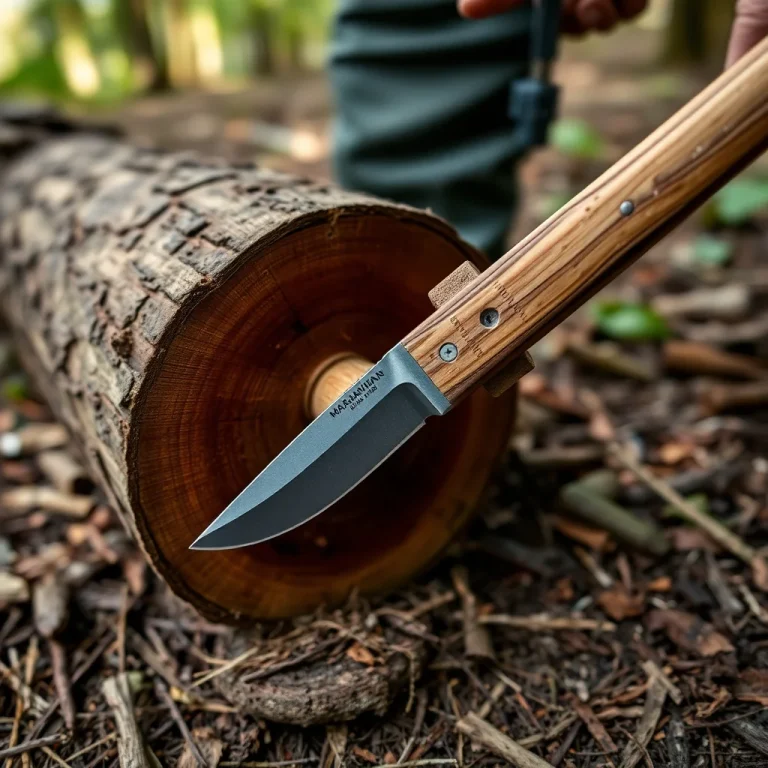
- Underside of fallen logs: The bottom surface of a log that has been on the ground for more than a week is sheltered from direct rain. Split the log with a knife and baton — the interior wood is dry regardless of surface conditions. Log splitting produces kindling from logs that appear too large for direct use.
- Resin-rich wood (fatwood): Dead pine stump heartwood saturated with resin is both hydrophobic and fire-resistant. Rain beads off the surface. A piece of fatwood in your kit eliminates the dry-tinder search entirely — see fire starting: 9 ignition methods for sourcing and identification.
Feather Sticks: Turning a Wet Branch Into Tinder
A feather stick is a branch from which thin shavings are peeled but left attached at the base, creating a curl of exposed dry wood around the wet surface. The technique: select a finger-width dead branch, whittle downward along the grain in thin strokes, stopping before cutting through each shaving. After 10–15 shavings, the stick resembles a feather — the curled shavings expose the dry interior wood at maximum surface area.
Three feather sticks propped together over a spark-catch (WetFire cube or Vaseline cotton ball) provide enough ignition surface to eliminate any need for dry natural tinder in light to moderate rain. The technique requires a sharp knife and 5–10 minutes of preparation — time well invested versus attempting to light wet kindling directly.
Fire Lay Selection: Log Cabin vs Teepee in Wind and Rain
Fire lay geometry determines wind and rain tolerance. In adverse conditions, the log cabin lay outperforms the teepee in three critical ways:
| Factor | Teepee lay | Log cabin lay |
|---|---|---|
| Wind resistance | Low — cone collapses, flame blows sideways | High — horizontal structure blocks wind between layers |
| Rain resistance | Low — rain falls directly onto tinder through the open top | Higher — upper fuel layers shelter the tinder base |
| Self-sustaining after ignition | Requires tending as it collapses | Burns down into a stable coal bed without tending |
| Ignition speed | Fast — cone concentrates heat upward | Slower — requires more initial heat to establish |
In wind above approximately 10 mph or rain heavier than drizzle, build a log cabin. In calm conditions, the teepee provides faster ignition. In a blizzard or driving rain, neither works without a constructed windbreak — pile two logs parallel to the wind direction to create a channel, and build inside the channel.
Snow Fire Building: Insulation and Platform
Snow presents two specific problems that rain does not: the fire platform melts through the snow surface if built directly on it, and meltwater from the fire perimeter flows back toward the base. Solutions:
- Green log platform: Lay 3–4 green logs side by side on the snow surface, forming a raised platform. Green logs resist burning long enough for the fire to establish a coal bed that sits above the snow melt-line. A platform of 4-inch diameter green logs holds for approximately 30–45 minutes before requiring replacement.
- Tamp the snow surface: Pack the snow firm before placing the platform. Loose snow melts faster; compacted snow is more stable under heat.
- Spark ignition protection: Cup your hands around the tinder bundle during ignition in driving snow. Snow landing on a fresh coal kills it in seconds — the 10–15 seconds between coal formation and tinder bundle ignition are the most vulnerable phase.
Sustaining the Fire Once Started
A fire that is started but not sustained is a failed fire. In rain and wind, the transition from tinder to kindling to fuel requires active management for the first 3–5 minutes:
- Stage fuel in three size classes next to the fire before igniting — pencil-thin, finger-thick, wrist-thick. Add size classes progressively; jumping from tinder to wrist-thick wood kills the fire.
- Dry larger fuel next to the fire as you add it — place damp kindling near the flames for 30–60 seconds before adding it to the fire; this surface-dries the outer wood layer.
- Use your body as a windbreak during the critical first 3 minutes — crouch on the windward side to block gusts while the fire establishes a coal bed.
Where to Go Next
Ignition method selection for wet and cold conditions — with a reliability ranking — is in best fire starters for wet and cold conditions. The bow drill in detail — wood moisture testing and technique — is at bow drill fire starting step by step. All nine ignition methods are compared in fire starting: 9 ignition methods from primitive to modern.