Major disasters overwhelm professional emergency response capacity quickly. After Hurricane Katrina (2005), the 2011 Joplin tornado, and the 2018 Camp Fire, documented patterns show the same result: formal responders are stretched across too large an area, and the communities that fare best are those where neighbors help each other in the immediate hours before outside help arrives. Community-level preparedness is not redundant with individual preparedness — it fills the gap between individual household capability and professional emergency services.
CERT: Community Emergency Response Team
FEMA’s Community Emergency Response Team program trains civilians to assist professional emergency responders during a major disaster. CERT training is free, approximately 20 hours, and available in most counties. The curriculum covers:
- Disaster preparedness (individual and community)
- Basic fire safety and fire suppression
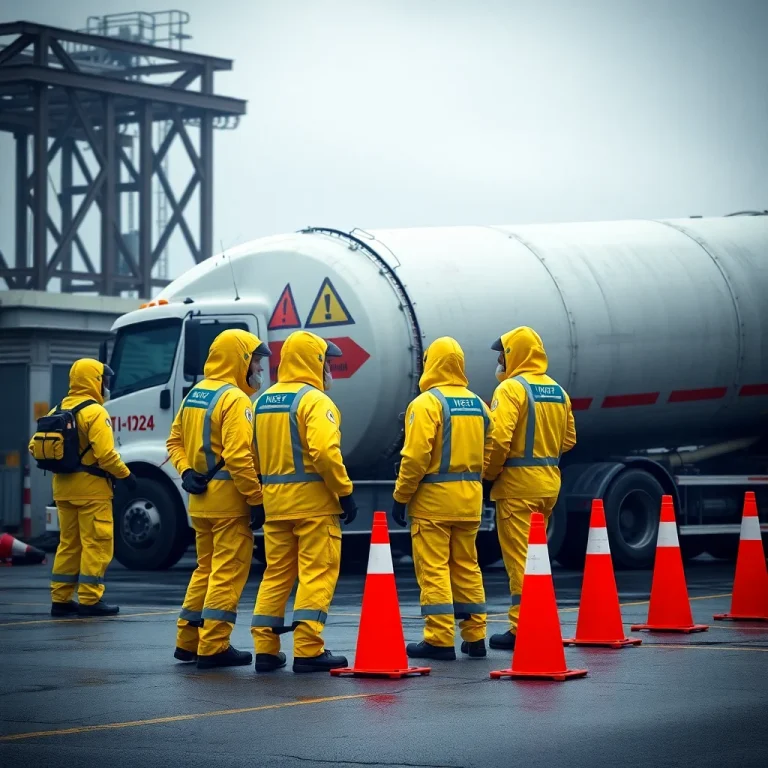
- Hazardous materials awareness
- Disaster medical operations: START triage, basic first aid, patient transport
- Light search and rescue
- Team organization and operations
Find your local CERT program at cert.fema.gov. CERT teams are typically pre-registered with their county emergency management office and receive activation calls during major local disasters. CERT training also provides structure for neighborhood preparedness groups — the skills and protocols transfer directly.
START Triage: Mass Casualty Patient Sorting
START (Simple Triage and Rapid Treatment) is the standard protocol for sorting patients in mass casualty events when the number of injured exceeds immediate care capacity. It takes approximately 30 seconds per patient and determines care priority:
START assessment sequence:
- Walking wounded: First, direct all patients who can walk to move to a designated area. These become GREEN (minor) — they can wait.
- Breathing: For non-walking patients, check breathing. Not breathing after repositioning airway → BLACK (deceased/expectant). Breathing rate above 30 breaths per minute → RED (immediate). Breathing under 30 → continue assessment.
- Perfusion: Check radial pulse or capillary refill. No pulse or capillary refill over 2 seconds → RED (immediate). Pulse present and capillary refill under 2 seconds → continue.
- Mental status: Can the patient follow simple commands (squeeze my hand, open your eyes)? Can’t follow commands → RED. Can follow → YELLOW (delayed).
Triage tag colors:
- RED (Immediate): Life-threatening injury that is survivable with immediate treatment. First priority for care.
- YELLOW (Delayed): Serious injury but patient is stable for now. Can wait without immediate death risk.
- GREEN (Minor): Walking wounded; can self-treat or wait for basic care.
- BLACK (Expectant): Deceased or injuries so severe that survival is unlikely even with immediate treatment, or would require disproportionate resource use.
The hardest part of START is the BLACK tag decision — not treating a critically injured person to allocate resources to those with better survival probability. This decision is made by the triage officer, not the treatment team. Once tagged, patients move to treatment areas where care is provided based on tags.
ICS: Incident Command System
The Incident Command System (ICS) is the organizational structure used by all US emergency responders. Understanding its basic structure helps civilians work more effectively with professional responders:
- Incident Commander (IC): Single person responsible for all incident decisions. Unity of command — everyone reports to one person.
- Operations: Does the work — search, rescue, fire suppression, medical care.
- Planning: Tracks resources, develops the incident action plan, manages maps and documentation.
- Logistics: Provides resources — food, equipment, transportation, facilities.
- Span of control: Each person manages no more than 5–7 subordinates. When a group gets larger than 7, a supervisor is added.
FEMA offers free ICS 100 and 200 training online (training.fema.gov). IS-100.C takes approximately 3 hours and provides the basic ICS framework. This training is valuable for any community preparedness role — it provides a common language with professional responders.
Neighborhood Resilience Planning
A neighborhood with coordinated preparedness is significantly more resilient than isolated households. A practical neighborhood preparedness structure:
- Neighborhood resource map: Survey residents for skills (medical training, mechanical, construction, agriculture), equipment (generators, chainsaws, medical equipment), and vulnerabilities (mobility limitations, medical dependence). Do this before any emergency — a simple spreadsheet or contact list.
- Block captain system: Designate one person per 10–20 households responsible for welfare checks after major events. This person knows who is vulnerable (elderly, disabled, language barrier) and ensures no one is overlooked.
- Communication system: A neighborhood group text or app (Neighbors app, Nextdoor) provides immediate information sharing. Identify which neighbors have ham radios or GMRS radios for backup when cell infrastructure fails.
- Shared resources agreement: Identify in advance who has a generator (and is willing to share power for medical devices), who has chainsaw and will help clear roads, who has extra food storage and is willing to help feed vulnerable neighbors.
What FEMA Individual Assistance Can and Cannot Do
FEMA’s Individual Assistance program is the primary federal disaster assistance mechanism. Understanding its limits sets realistic expectations:
- Average FEMA IA grant: Approximately $3,000–7,000 per household for housing and personal property assistance after a declared disaster. Not sufficient to rebuild a home or replace a vehicle.
- Eligibility requirements: Available only in presidentially declared disaster areas. Does not cover losses covered by private insurance. Does not cover areas that don’t receive a disaster declaration (most localized events).
- Timeline: Registration opens after a declaration; funds disbursed weeks to months later. FEMA IA is a recovery tool, not an emergency response tool.
- SBA disaster loans: The Small Business Administration offers low-interest disaster loans to homeowners and renters for uninsured losses — up to $200,000 for home repair and $40,000 for personal property. Lower interest rates than conventional loans; requires a credit check.
The practical implication: individual household preparedness and insurance are the primary financial recovery tools after a disaster, not government assistance. FEMA IA supplements but does not replace adequate insurance coverage and personal emergency funds.
Where to Go Next
Medical skills for mass casualty response — tourniquet application, wound packing, and triage — are in wilderness first aid and TCCC: tourniquet application, wound packing, and burn treatment. Individual household financial resilience for disaster recovery is covered in economic collapse preparedness: financial resilience, supply stockpiling, and barter economy.